Thrive for Life | Accessibility Specialists

Choosing a Home Accessibility Consultant in Honolulu

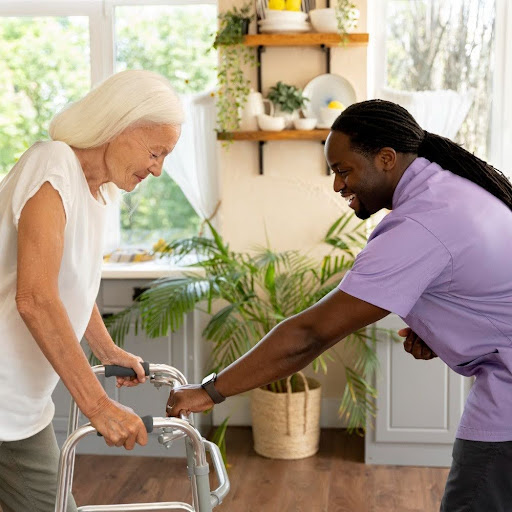
Occupational therapist assisting an elderly woman using a walker in a bright home environment, demonstrating safe mobility support for aging in place

Why Home Accessibility Guidance Matters in Honolulu: How to Choose The Right Expert

If you’re watching a parent slow down on the stairs, or you’re a case manager trying to safely discharge a patient back to a multi-level Honolulu home, you already know how fast things can go wrong.

One fall on a narrow stairway,  a slippery bathroom floor. That’s all it takes to lose independence, spend weeks in rehab, or start a conversation no family wants to have. A home accessibility consultant in Honolulu doesn’t just add grab bars. They evaluate the whole picture, your loved one’s abilities, your home’s layout, your family’s capacity, and design a plan that actually works for a Hawaii home.

At Thrive For Life, our consultants are licensed occupational therapists with certifications in aging in place (CAPS, ECHM, CEAC) and 25+ years of experience in Hawaii homes. We don’t just write recommendations; we do the installations too. One call instead of three. This guide explains what to expect, when to call, and what separates a thorough assessment from a sales visit in disguise.

What A Home Accessibility Consultant In Honolulu Actually Does

A qualified home accessibility consultant is part clinician, part designer, and part problem solver. Their core role is to match a person’s abilities with the realities of their home environment, then create a clear, stepwise plan for modifications.

Core services and responsibilities

Most Honolulu based consultants provide:

Instead of simply “adding grab bars,” a consultant looks at the full picture: transfer techniques, wheelchair type, vision, cognition, caregiver capacity, and cultural preferences, all in the context of a Hawaii home that might be older, multi level, or on a steep lot.

At Thrive For Life, every assessment is led by a licensed OT. That matters because OTs are trained to evaluate the person, not just the space. We look at transfer technique, cognition, caregiver fatigue, and how your kupuna actually moves through their day. Then we design around that, not around what’s easiest to install.

Local housing realities in Honolulu

Honolulu has unique architectural challenges:

A consultant familiar with Honolulu will propose solutions that actually fit these structures. For instance, they may recommend a compact vertical platform lift instead of a long ramp that would eat up a small yard, or a Stiltz style home lift where interior stairs are steep and curved.

When You Should Hire A Home Accessibility Consultant In Honolulu

Many families wait until after a fall or hospitalization to ask for help. That is understandable, but often avoidable. There are several clear trigger points when bringing in a consultant is especially important.

Before hospital discharge or rehab completion

Hospital discharge planners and case managers in Honolulu know the pressure to send patients home quickly. However, sending someone back to a multi step entry or a tub shower “to see how it goes” can lead to readmission.

Best time to involve a consultant:

Consultants can collaborate with physical and occupational therapists to make sure that what is practiced in rehab can actually be done in the home environment. For more detailed guidance on timing, see resources like “When To Hire A Pro To Help With Accessibility Home Modifications.”

A note for families: You don’t need to wait for a crisis. Many of our best outcomes come from families who called before anything happened.  When mom mentioned she’d been gripping the wall on the stairs, or dad stopped using the second floor bathroom. Earlier usually means simpler, less expensive, and less scary.

When mobility or health status changes

Consider a consultant if you notice:

Acting early usually means simpler and less expensive modifications. For example, strategically placed handrails, lighting, and threshold ramps can prevent falls and may delay the need for major structural work.

When planning aging in place or a renovation

For architects and residential contractors in Honolulu, integrating a consultant during design is efficient and reduces change orders. This is especially true for:

Important: A consultant does not replace an architect or contractor. Instead, they provide the clinical and functional input that helps design teams avoid costly mistakes, such as doorways that are still too narrow for a future wheelchair.

What To Expect From A Home Accessibility Assessment

Families and professionals often ask “what exactly will they do during a visit?” A structured, methodical process is a sign of a qualified consultant.

Typical assessment process

While each provider has their own style, a comprehensive assessment in Honolulu usually includes:

  1. Pre visit intake
    • Medical and functional history
    • Current equipment list, such as walker, wheelchair, CPAP
    • Home floor plan or photos if available
  2. On site walkthrough
    • Entry and parking access
    • Stairs, landings, and hallways
    • Bathroom, bedroom, kitchen, laundry, and key outdoor areas
  3. Functional observation
    • Transfers in and out of bed and chairs
    • Toilet and shower practice if appropriate and consented
    • Stair or ramp navigation
  4. Discussion of priorities and budget
    • Safety concerns that worry family the most
    • Timeframes, such as an upcoming discharge date
    • Financial constraints and possible insurance resources
  5. Written report and plan
    • Specific product recommendations, dimensions, and placement
    • Phased approach, for example “Phase 1 safety essentials” and “Phase 2 comfort and independence”
    • Notes for contractors, including required clearances and heights

Example: Multi step entry in a Honolulu neighborhood

Consider an older home in Palolo with 8 steep front steps from driveway to front door and limited side yard. A consultant might:

For a detailed narrative of how this plays out in real life, case studies such as “Transforming Home Accessibility A Client Success Story Using A Flexstep By Liftup And Its Impact On Wheelchair Users” can be very helpful.

Common Home Modifications Recommended In Honolulu

Each recommendation should be tailored, but certain patterns are common in Hawaii, especially in older, multi level homes.

Entries, stairs, and vertical access

Honolulu homes often require:

Solutions like the Stiltz Home Lift can be especially valuable in two story homes where stair lifts are not ideal, for example with tight curves or transfer difficulties.

Bathrooms and toileting

Bathrooms are the highest risk area. Consultants routinely address:

Bedrooms and daily living areas

To support safe, independent living, consultants may suggest:

Key Takeaway: The goal is not a clinical looking home. Skilled consultants in Honolulu work hard to preserve the island feel, natural light, and aesthetics while quietly integrating safety and accessibility.

Working With Contractors, Therapists, And Insurers

Accessibility projects succeed when all players collaborate. A home accessibility consultant often acts as the “translator” between medical, construction, and insurance worlds.

Coordination with architects and contractors

For building professionals, a consultant can:

This collaboration is especially valuable in custom aging in place projects and ADUs on Oahu, where small footprints and zoning rules limit options.

Integration with therapists and home health

Occupational and physical therapists appreciate consultants who:

Home health and hospice agencies in Honolulu can reduce injuries to staff and caregivers when the home environment supports safe body mechanics.

Navigating insurance and funding

Long term care and disability insurers sometimes cover certain accessibility related costs, especially if modifications prevent facility placement. A consultant can:

Expert Insight: Written recommendations that clearly connect each modification to a safety risk or functional limitation are far more persuasive to insurers than generic “home safety” statements.

How To Choose The Right Home Accessibility Consultant In Honolulu

Not all consultants have the same background or experience. Selecting the right partner will determine the quality and practicality of the final plan.

Credentials and experience to look for

When evaluating options, consider:

Ask how many home assessments they have completed in the past year, and what percentage involved wheelchair users, multi level homes, or dementia, depending on your situation.

Key questions to ask before hiring

You can quickly narrow your list with targeted questions such as:

You can also ask about their familiarity with specific solutions you may be considering, such as home lifts, FlexStep systems, or barrier free showers. Reviewing real world stories like the FlexStep client success case can help you know what to expect.

Typical pricing and scope in Honolulu

Fees vary by provider and scope, but in Honolulu you will commonly see:

Warning: Be cautious of vendors who only sell one type of product and offer “free assessments” that always recommend the same solution. An independent or clinically grounded consultant should consider multiple options and price points.

A Practical Option For Vertical Access: Thrive For Life LLC

For many Honolulu homes, the biggest barrier is vertical movement between floors. Stairs may be steep, curved, or exposed to weather. Ramps may be impractical because of lot size and slope.

In these cases, a compact residential lift can be a safer and more dignified solution than relying solely on caregivers or avoiding parts of the home altogether. As part of a comprehensive plan from a home accessibility consultant, a Stiltz style home lift can:

Thrive For Life LLC specializes in these solutions for Hawaii homes and can work alongside your consultant, contractor, and therapy team to integrate a lift into a broader accessibility plan that matches local codes and aesthetics.

To explore whether this type of lift fits your home’s layout and your family’s needs, visit Thrive For Life’s special offer page:
https://thriveforlife.com/stiltz-homelift-hawaii-special-offer and Learn more.

Summary Of Key Takeaways

Frequently Asked Questions

What is the difference between a home accessibility consultant and a contractor?

A contractor focuses on building and installation. A home accessibility consultant focuses on function and safety. They evaluate the person’s abilities, medical conditions, and equipment, then design a plan that a contractor can build. In Honolulu, consultants also help adapt recommendations to local housing types, climate, and codes, so the right modifications are done correctly the first time.

Does insurance cover home accessibility consulting or modifications in Hawaii?

Coverage varies. Medicare typically does not pay for structural home changes, but may cover some equipment. Long term care and disability insurance policies sometimes fund accessibility work if it helps avoid facility placement. A consultant can provide clinical documentation that supports funding requests and can help families prioritize what must be done now versus later, based on available resources.

How long does a typical home accessibility project take in Honolulu?

Timelines depend on scope and permitting. A basic assessment and implementation of minor modifications, such as grab bars, lighting, and small ramps, may be completed within one to three weeks. Larger projects, such as bathroom remodels or installing a home lift, can take several weeks to a few months, especially if permits or condominium approvals are required.

Can a consultant help in a rental or condominium where major changes are limited?

Yes. In Honolulu’s rental and condo market, consultants are used to working within restrictions. They often recommend non invasive or reversible solutions such as tension mounted supports, portable ramps, modular thresholds, and freestanding shower chairs. They can also advise on how to talk with landlords or associations about reasonable modifications needed for disability access.

When is it “too late” to call a home accessibility consultant?

It is rarely too late. Even in advanced illness or hospice situations, consultants can improve safety and comfort for both patients and caregivers, for example by optimizing bed placement, transfer setups, and bathroom access. However, earlier involvement usually means more options, less stress, and better ability to keep elders safely at home in Honolulu.


Call us: +1.808.289.7816

Get a Clear, OT-Led Recommendation to Help You Stay Safe at Home
Before anyone decides about a homelift, we begin with a brief questionnaire to help our licensed occupational therapist understand your home layout, daily movement, and any safety concerns.
Once submitted, our team reviews your answers and contacts you to schedule your free OT assessment. There is no obligation, no sales pressure, and no commitment. You receive medically informed guidance to understand whether a Stiltz Homelift is the right fit for your ohana.


A licensed OT will review your answers and contact you with the next steps. No pressure at any point.


Prefer to speak with someone? Call us at (808) 289-7816.

Exit mobile version